RTM Codes Counting as Visits: Why That's Wrong for Physical Therapy
RTM Codes Counting as Visits: Why That's Wrong for Physical Therapy
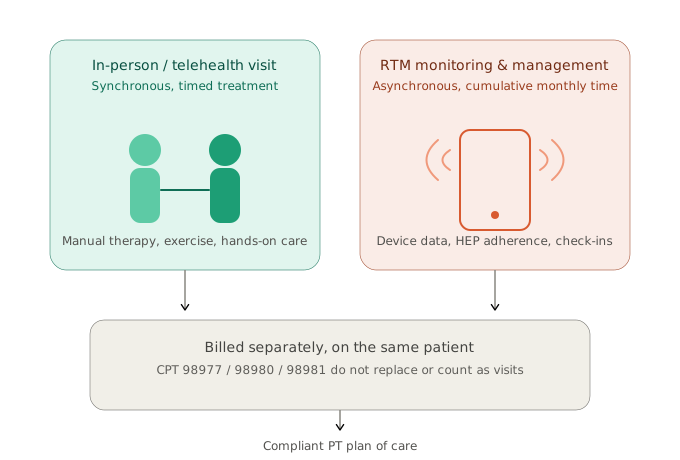
Remote Therapeutic Monitoring (RTM) CPT codes do not count as in-person or telehealth patient visits under a physical therapy plan of care; instead, they represent distinct monthly management and device supply services that are billed separately. Misclassifying RTM codes as standard patient visits disrupts care plans (and burdens staff by creating needs for more Authorization), limits necessary clinical touchpoints, causes extra work by clinicians (ie. early Progress Notes), and causes billing non-compliance that leads to denied claims.
Quick Answer: Do RTM codes count as visits?
No. RTM codes (such as CPT 98977, 98980, and 98981) are monthly service codes, not individual patient visits. Counting them as visits artificially exhausts a patient’s authorized visit limit, misrepresents the care delivered, and violates standard insurance billing guidelines. RTM should always be billed in addition to, not in place of, regular physical therapy visits.
The Difference Between RTM Codes and Physical Therapy Visits
Conflating RTM billing codes with traditional physical therapy visits creates significant clinical and financial confusion. Traditional visits require synchronous, real-time engagement (either in-person or via telehealth) to perform interventions like manual therapy or therapeutic exercise.
RTM codes represent asynchronous data collection and cumulative monthly management. Because they track check-ins, home exercise program (HEP) adherence, and non-face-to-face clinical decision-making, they operate on an entirely different regulatory track than standard 15-minute timed codes.
Why Counting RTM Codes as Visits Harms Your Practice
Treating RTM tracking or monitoring sessions as standard visits damages both patient outcomes and clinic revenue.
Exhausting Patient Visit Limits
Many commercial insurance plans cap the total number of physical therapy visits a patient can receive per calendar year or authorization period. If a clinic improperly logs an RTM data transmission or a 20-minute monitoring block as a standard "visit," the patient's authorized care window shrinks. This forces therapists to discharge patients early before they reach their functional goals.
Increased Claim Denials and Compliance Risk
Payers look for clear documentation showing that RTM requirements are met independently of regular treatment sessions. If an auditor sees RTM codes substituted for treatment visits—or if RTM time is double-counted during an active in-person session—the claims will be flagged as non-compliant. This results in immediate payment clawbacks and institutional denials.
Correct Coding Requirements for RTM in Physical Therapy
To bill cleanly and avoid compliance issues, physical therapy groups must understand the exact thresholds for the primary RTM CPT codes.
Important Compliance Note: CPT 98980 requires at least one interactive communication (such as a phone call, in-person interaction, or secure video chat) with the patient during the calendar month to qualify for reimbursement. The time spent on this call counts toward the required 20-minute threshold but does not convert the service into a standard physical therapy visit.
Selecting the Best RTM Vendor to Prevent Billing Mistakes
Preventing RTM compliance errors requires a dedicated remote therapeutic monitoring software that separates tracking data from your standard scheduling system. The best RTM vendor acts as a safeguard, ensuring your staff never accidentally logs RTM actions as physical visits.
SaRA Health provides the RTM Billing Infrastructure that ensures payers abide by the rules. Our definition of "denial" is the broadest in the industry - in that we consider even a paid RTM code "denied" if the payers counts the code(s) as a visit.
Frequently Asked Questions About RTM Billing
Can I bill an RTM code on the same day as an in-person physical therapy visit?
Yes, you can bill RTM codes on the same day as an in-person visit, provided the RTM time was accumulated outside of the face-to-face treatment time. You must not double-count standard treatment time as RTM monitoring time.
Do RTM codes require a specific modifier for physical therapy assistants?
Yes. When RTM services are provided in whole or in part by a Physical Therapist Assistant (PTA), the CQ modifier must be applied to the treatment management codes (98980 and 98981) to remain compliant with payer guidelines.
What happens if a patient transmits data for fewer than 16 days for CPT 98977?
If a patient transmits data for fewer than 16 days out of a 30-day period, CPT code 98977 cannot be billed. However, you may still be eligible to bill the management time code (CPT 98980) if your clinical team accumulated 20 minutes of review and conducted the required interactive communication.
Protect Your Practice Revenue with Compliant RTM
Counting RTM codes as patient visits is a compliance error that costs your clinic money and shortchanges your patients. By using dedicated remote therapeutic monitoring software, physical therapy groups can easily protect their revenue streams while keeping patient care on track.
Ready to implement a compliant, high-yielding RTM program without billing confusion? Schedule a demo with SaRA Health today to see how we automate compliance for physical therapy practices.
